
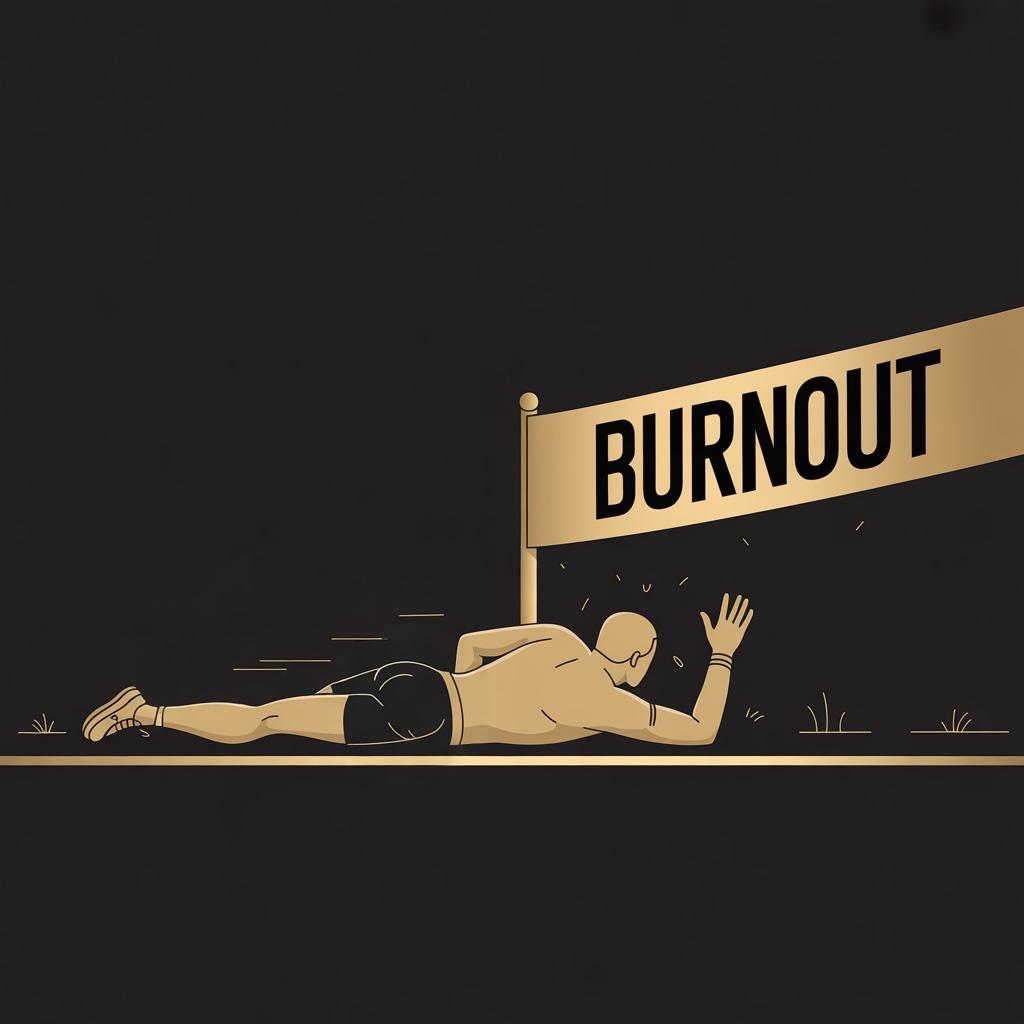
Burnout is the default setting for any self-respecting perfectionist. If you find yourself not quite crispy enough, this guide is for you. Roll up your sleeves, hydrate (with espresso), and silence that gentle voice suggesting “balance.”
We’re building a masterpiece of overcommitment here, complete with raised stakes, immaculate plans, and zero margin for oxygen. Ready? Here are the exact steps to level up from “a little frazzled” to full-blown burnout.

1) Escalate Everything to DEFCON 1
Treat every task like a referendum on your worth. Breakfast becomes a performance review. Selecting a birthday card reads like proof of your relational depth. If all tasks are mission-critical, you’ll guarantee constant adrenaline and zero perspective. The more ambiguous the goal, the easier it is to inflate the stakes until your nervous system confuses grocery shopping with bomb disposal.
2) Plan Until the Plan Feels Like Progress
Replace action with research, diagram your diagrams, and don’t take a step until you’ve eliminated surprise, risk, and joy. Delay until conditions are perfect. When they aren’t, delay some more. This preserves your unblemished record of not failing by not beginning.
3) Write Like the Judges Are Watching
Hold yourself to publish-ready standards at draft zero. Edit every sentence as if the Pulitzer committee is live-streaming your cursor. Ideas hate this and will flee, which is the point. Creativity interferes with staying exhausted, so better to keep it out.
4) Worship the Grind, Ignore the Result
Equate exhaustion with excellence. If it didn’t hurt, it doesn’t count. If you end the day without a tension headache and a faint sense of doom, you’re leaving gains on the table. Track hours, not outcomes. Praise strain over results. With time, your nervous system will learn the sacred rhythm: overthink, overprepare, overdeliver, under-rest. Repeat until your calendar glows like a stovetop.
5) Put Your Persona on Payroll
Lead with your brand: “the reliable one,” “the meticulous one,” “the human version of a safety net.” Then engineer your days to protect that image at any cost. Skip experiments, mask confusion, over-promise for optics. Growth is messy. Better to run a full-time PR department for your ego.
6) Delay Feedback Until It Hurts
Work in splendid isolation until you’re “basically done,” then invite notes when edits require a hacksaw. Changes will be slow, expensive, and deeply personal, perfect for spiking cortisol and guaranteeing you learn as little as possible while feeling as much as possible.
7) Promote Awkward Moments to Federal Law
Trip over one word? Ban it from your vocabulary. Get a single nitpick on a slide? Spend ten hours realigning titles no one will ever see again. Turn tiny discomforts into permanent policies. Nothing burns calories like legislating your personality.
8) Construct the Infinite To-Do
Blend strategy, laundry, and existential dread into one majestic list. Alphabetize it for flair. Add sublists to your sublists, maybe a color legend no one understands. Then admire it until your eyelid twitches. The bigger the list, the smaller your will to move.
9) Make Rest a Prize You Never Win
Announce you’ll relax when everything is flawless and everyone is pleased. Since that day is scheduled for “never,” you’ll keep your edge. Frayed, but technically intact. Sleep becomes a bargaining chip, and weekends are for repairing the person you impersonated Monday to Friday.
10) Ignore Your Body Until It Starts Speaking in ALL CAPS
Rebrand tension as “focus,” headaches as “feedback,” and shallow breaths as “efficiency mode.” Top off with espresso, fold your spine into a question mark, and postpone water until your throat files an HR complaint. Your body will start politely with yawns, eye strain, a twinge here and there, then escalate to sirens: migraines, chest flutters, 3 a.m. wake-ups. That’s not drama, that’s diagnostics. Keep overriding the alerts, you’ve got more important things to attend to.

The Perks of Pushing Yourself to the Brink
Follow the playbook and you get a gorgeous hamster wheel. First you crank up the stakes, then you chase control, then you delay action until your deadline taps you on the shoulder and asks for a ride home. Timelines compress, stress spikes, clarity packs a small suitcase, and (hero move) you respond by trying to control even more. From the outside, you look like “high standards.” On the inside, you’re paying an anxiety tax with compounding interest. Over time, sleep shrivels, patience goes on sabbatical, and joy ghosts you mid-text. Which is great news, you’re nailing the burnout training plan. Keep this pace and you’ll qualify for nationals, complete with under-eye medals and a complimentary subscription to Existential Dread Monthly.
The Anti-Playbook: For Dropouts from the Grind Games
If you don’t have what it takes to stagger across the burnout finish line, welcome to the quitter’s club. Keep the standards, ditch the self-scorch. Here’s how to handle the same ten traps without lighting your life on fire.
1) Calibrate Stakes to Reality
Ask, “If this goes poorly, what actually happens? Do I get a stern email or does the moon fall?” Sort by consequence: life-changing, important, routine. For routine tasks, write a single, simple definition of “done” (one sentence), then let them be gloriously average. Save the cape for the few things that truly move the needle.
2) Favor Reversible Starts Over Perfect Plans
Before step one, ask, “Can I test this and un-do it without calling IT?” If yes, do the tiniest version, like a sketch, three bullets, a five-minute trial. Think of progress as your planning app and feedback as the weather forecast: check it often, bring a light jacket.
3) Separate Making from Polishing
Two-pass rule. Pass one: make it real, messy, honest, reviewable. Pass two: make it readable, clear and kind. Do not braid these together unless you enjoy arguing with yourself in public.
4) Measure Outcomes, Not Drama
Count pages finished, calls made, decisions taken, problems solved, not sighs, hours, or snack wrappers. Effort is a cost center, invest it where ROI beats “I suffered bravely.”
5) Update Your Identity to “Evidence-Based”
Retire “I never drop a ball” for “I keep reasonable promises to myself.” Log tiny kept commitments, like two minutes of practice, one honest message, a short walk. Consistency builds a quiet confidence.
6) Get Early Eyes on the Essence
Ask for a quick gut-check while the ink is still wet: “Right problem?” “Does this actually answer it?” Focus on substance, not polish. Ten minutes of early nudge beats ten hours of late-stage cosmetic surgery.
7) Turn Friction into Reps, Not Rules
Awkward moment? Great, do a micro-exposure. Use the word again, present to one friendly human, send the draft with one deliberate imperfection. Teach your nervous system that discomfort is a notification, not a fire alarm.
8) Shrink the List, Strengthen the Loop
Use three lists only: Now (today’s top 3), Next (5–7 for this week), and Later (the parking lot). Check them once a day. Move items forward or let them go. Give your brain a clear runway, not a cluttered garage sale.
9) Schedule Recovery Like a Deliverable
Rest isn’t dessert, it’s fuel. Put anchors on the calendar: lights-out time, a 10–15 minute walk, no phone for the first and last 30 minutes of your day, one weekly hour of unstructured fun. Guard these like meetings with your favorite intimidating mentor.
10) Use Minimum Effective Care for Your Body
Install micro-resets: a 60-second exhale-heavy breath set, shoulders down, eyes on a far point; sip water; two minutes of stretch between tasks. Small levers restore wide-angle thinking.

The Real Flex
Sure, you can keep sprinting on the hamster wheel until you’re extra-toasty. But the actual power move isn’t incinerating yourself, it’s aiming that intensity where it counts and letting the rest be amazingly average. Think of it as elite standards with basic human settings turned back on. Put the bar where it matters, then move with kindness and a little swagger. You can be precise without being perpetually panicked. You can care hard without letting your care steamroll you. And you can stack real wins — tiny, boring, repeatable ones — until you’ve built a body of work (and a life) you actually like. Not shinier, just saner. That’s the flex.